The Compliance Operating Model is Becoming the Constraint on Growth
Posted: Wednesday 16 September 2026
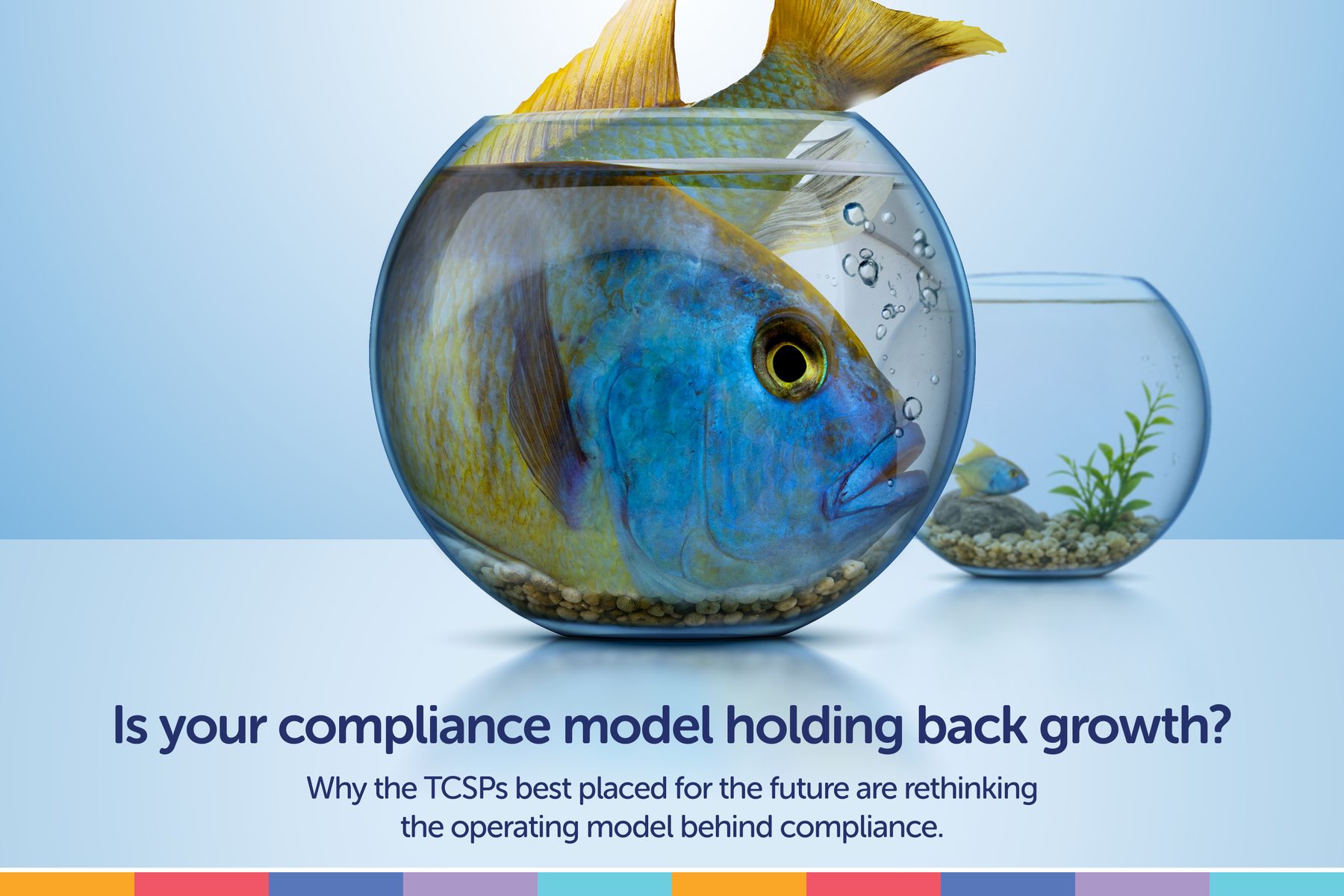
Why the next generation of TCSPs won't be defined by better compliance—but by a better operating model.
For decades, Trust and Corporate Service Providers have relied on an operating model that has served the industry remarkably well.
As client books grew, firms hired more compliance professionals. As regulations evolved, review processes became more comprehensive. As expectations increased, additional controls were introduced.
The model was simple:
More clients meant more reviews.
More reviews meant more people.
More people meant more cost.
For many years, this worked.
Today, it is becoming increasingly difficult to sustain—not because compliance has become less important, but because the economics of compliance have fundamentally changed.
The hidden cost of growth
Every successful TCSP wants to grow. More clients, more jurisdictions and more complex structures all increase compliance workload. Historically, the response has been to recruit more people. Compliance therefore becomes a variable cost that rises almost in direct proportion to revenue, limiting operating leverage.
The question boards should be asking
Boards rarely ask, 'How can we complete more compliance reviews?' They ask, 'How can we continue growing without increasing operational cost at the same rate?' The issue is no longer compliance—it is scalability.
Why the traditional model no longer scales
The existing operating model is people-centric. As workloads increase, firms employ more people. Growth requires headcount. Headcount increases cost. Cost limits profitability. Compliance becomes the constraint on commercial expansion.
Artificial intelligence changes the economics
The real opportunity presented by AI is not simply automation. Technology can continuously collect evidence, monitor multiple information sources, identify meaningful changes and prepare recommendations without proportional increases in human effort. Professionals spend less time gathering information and more time applying judgement.
A new operating model for regulated growth
Traditional operating models revolve around scheduled reviews and manual evidence gathering. The emerging model revolves around continuous awareness: evidence is gathered continuously, material changes are surfaced automatically and experts focus where judgement creates value.
Growth without proportional cost
Traditional model: More clients → More reviews → More compliance professionals → Higher operating costs.
Emerging model: More clients → Continuous monitoring and automated evidence gathering → Experts review exceptions → Costs grow significantly more slowly than revenue.
This creates operating leverage while maintaining strong governance.
Better governance supports better growth
Greater visibility of changing risk enables firms to allocate expertise where it has the greatest impact, reduce unnecessary client friction and make better-informed commercial decisions while strengthening governance.
The next generation of TCSPs
The firms that lead the next decade will redesign how compliance operates. They will build businesses where experienced professionals spend their time making decisions rather than gathering evidence, and where growth is no longer constrained by linear increases in operational cost.
Conclusion
Artificial intelligence is not the destination. Automation is not the destination. The destination is building a business that can grow sustainably while maintaining the highest standards of governance.
The winners in the next generation of regulated wealth will be the firms that have learned how to scale governance at the speed of growth.
Contact Vega to find out more